Bidspirit auction | Antique photo /Carte de Visite
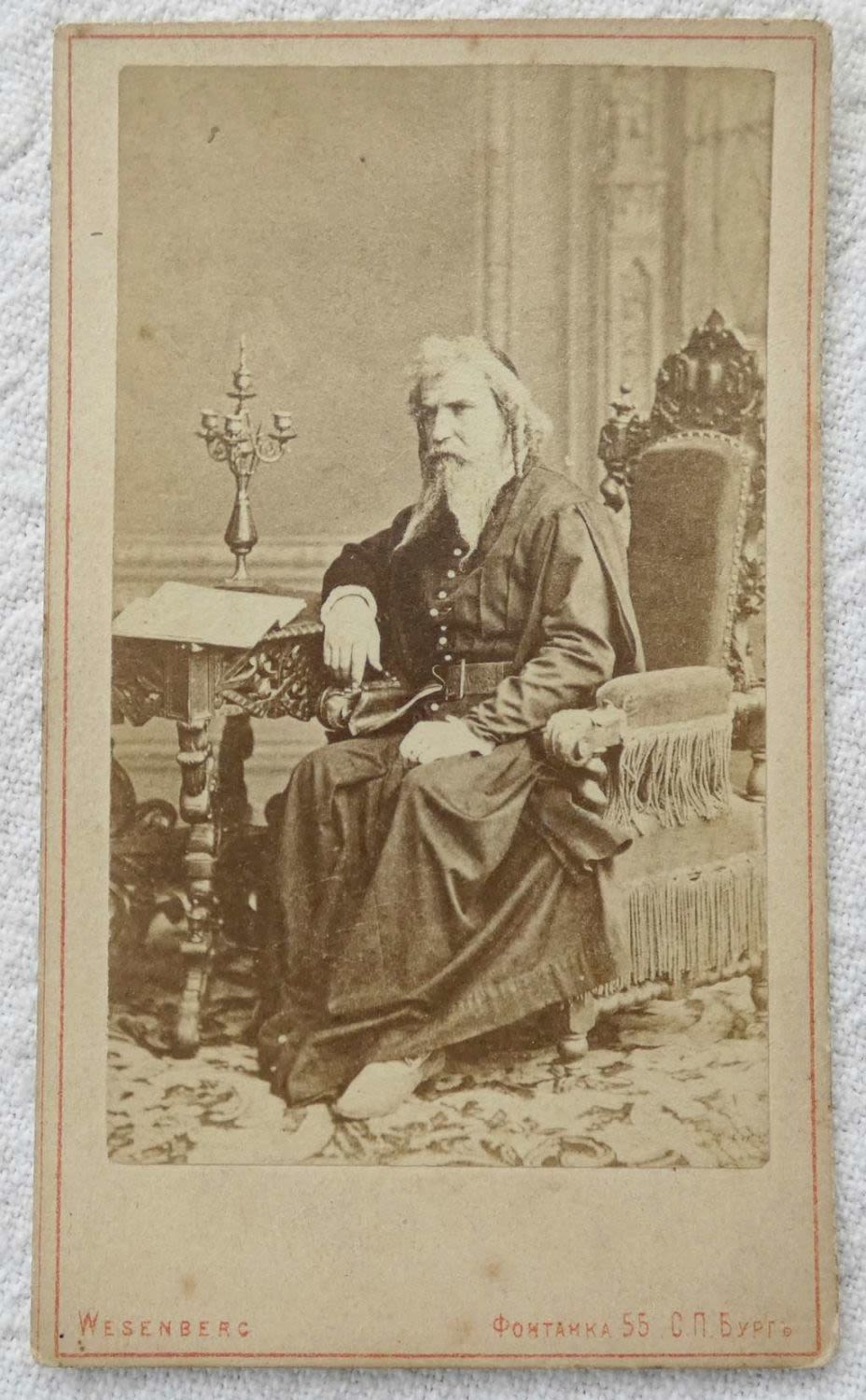
Antique photo /Carte de Visite of a Rabbi (Naum) in Kippah, Photo by Vezenberg, St.Petersburg, 19th cen. - Antique photo /Carte de Visite of a Rabbi (Naum) in Kippah, Photo by Vezenberg, St.Petersburg, 19th cen. On reverse side wrote in pencil in Russian – Naum (Nahum) Size: 10.5 x 6.2 cm. (4.1 x 2.4 inches) Light wear. The exact date when Wilhelm Wesenberg’s workshop in the Strubinsky house on the Fontanka River embankment received the name “Wesenberg and Co” is unknown. In December 1882, Heinrich Tolvanen became the owner of a workshop in this house and in 1884 he moved the Wesenberg and Co. photo studio to Makarov’s house on Voznesensky Prospekt. At the end of the 1870s, Ivan Grinberg’s workshop operated in Makarov’s house on Voznesensky Prospekt. In 1881, Greenberg moved the workshop to Nevsky Prospekt and over the next two years David Gershuni, Dmitry Zdobnov and Sergei Lyubimov worked in the workshop on Voznesensky. In September 1899, Heinrich Wesenberg became the owner of the workshop in Makarov’s house, and Heinrich Tolvanen opened a workshop on Vasilyevsky Island. In the early 1900s, Heinrich Wesenberg changed the name of the workshop. In July 1912, Lydia Rudneva became the new owner of the photo studio and in the documents received for ownership, the workshop was mentioned as “Wesenberg G.” A kippah[a] (plural: kippot), yarmulke, yamaka, [3] skullcap, or koppel is a brimless cap, usually made of cloth, traditionally worn by Jewish males to fulfill the customary requirement that the head be covered. It is worn by all men in Orthodox Jewish communities during prayers and by most Orthodox Jewish men at all other times. Among non-Orthodox Jewish communities, some who wear them do so at all times, while others wear them only during prayer, while attending a synagogue, or in other rituals.